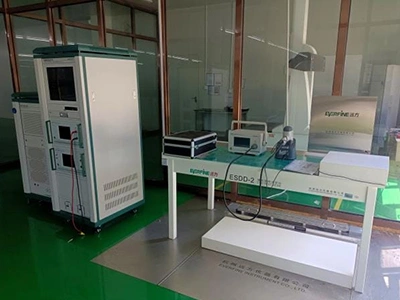
Supported by an elite R&D team and advanced laboratory facilities, we provide reliable product development, testing, and technological innovation capabilities
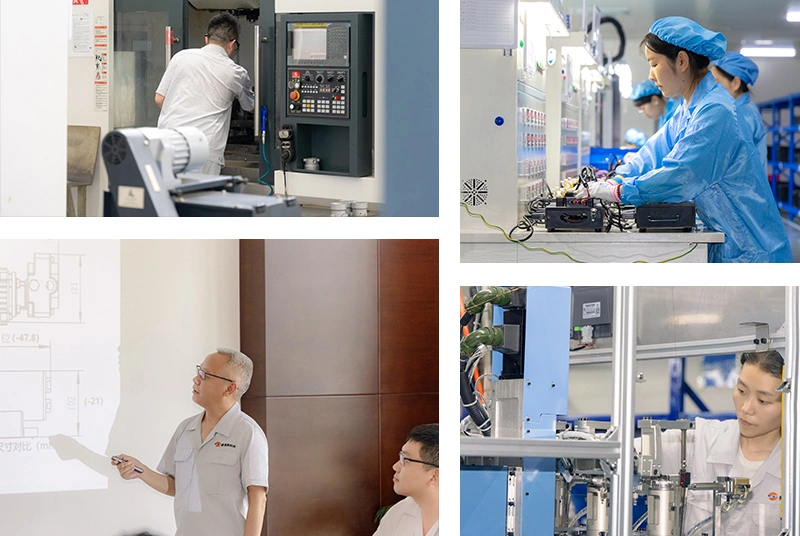
The company has established an elite R&D team of 51 members, accounting for 17% of total employees, and has co-founded a university-enterprise R&D technology center with Wuhan University of Technology, forming a deeply integrated innovation ecosystem.
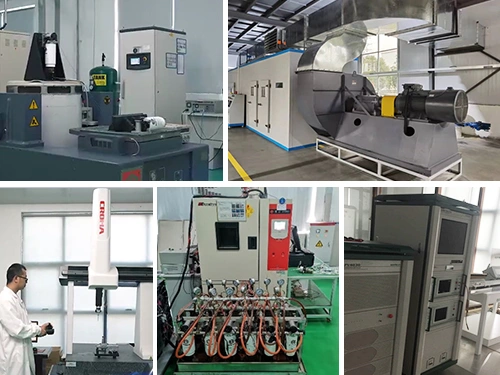
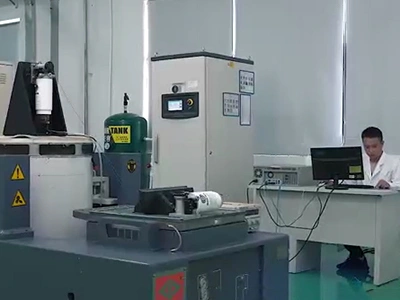
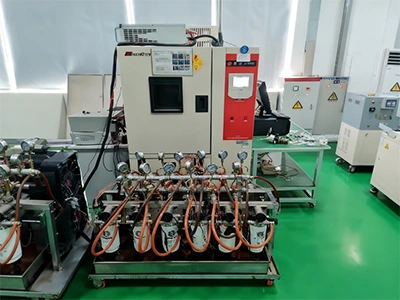
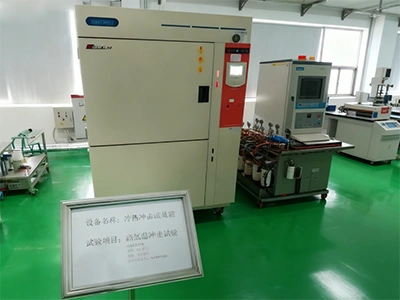
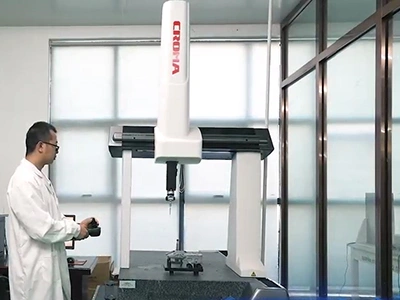
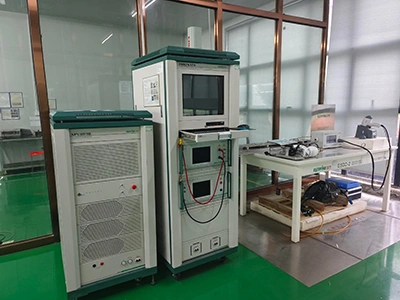
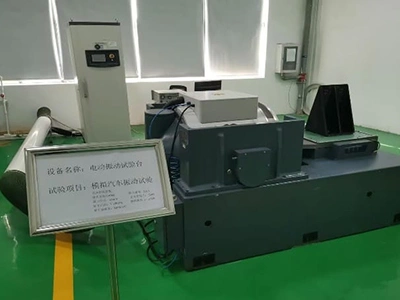
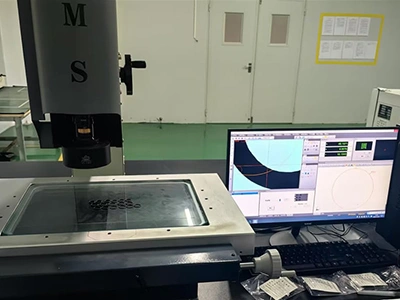
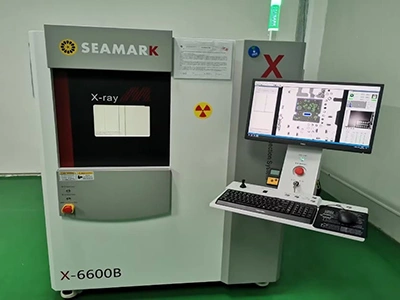
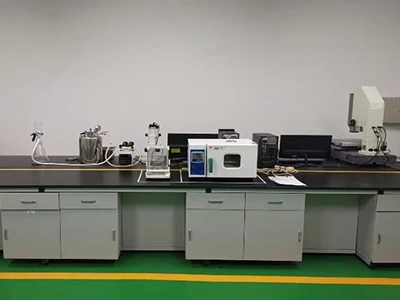
Supporting research efforts, the company has built a dedicated R&D base, including laboratory buildings, a technology center, a pilot workshop, and supporting facilities, creating an innovation pilot base for new product development and technology transfer. Saiensi has a 1,900-square-meter testing laboratory, equipped with multiple high-precision instruments such as coordinate measuring machines, universal tool microscopes, infrared carbon-sulfur analyzers, and atomic absorption spectrophotometers, as well as environmental testing chambers, oil pump testing equipment, and other specialized testing devices. Saiensi also operates a physical and chemical analysis lab, impact testing platforms, multifunction test benches, environmental test chambers, and static test benches. This extensive R&D and testing capability ensures reliable product quality.
Saiensi consistently pursues technological innovation, establishing a comprehensive system that combines independent R&D with collaborative industry-academia research. Long-term partnerships with Wuhan University of Technology, Hubei University of Arts and Science, and Hubei University of Automotive Technology provide strong technical and talent support.
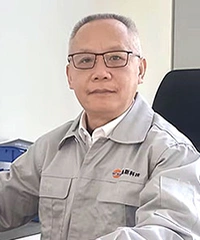
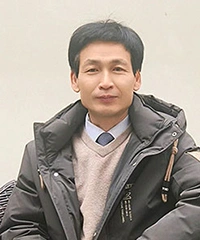
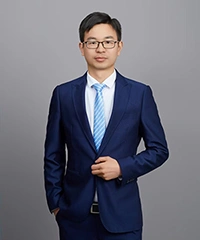
- Technical Director, Saiensi; Graduate Supervisor, Wuhan University of Technology.
- Introduced domestic production for foreign crankshaft heat treatment and double-row tankless carburizing lines. Holds over 10 invention patents.
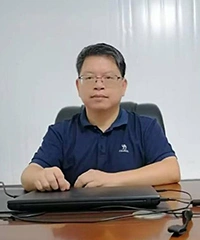
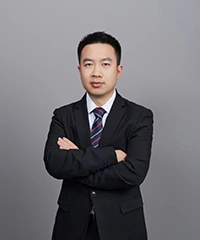
- General Manager, Shiyan Feijun and Shiyan Precision Sealing Co. Trained under Academician Wang Yun of the Chinese Academy of Sciences, an expert in gas springs.
- Over 30 years of experience in rubber seals and gas spring R&D, member of China Gas Spring Standard Committee.
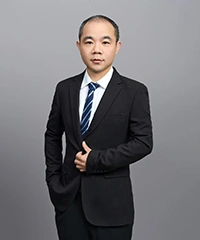
- Vice President of Technology, PhD, Beijing Institute of Technology; Associate Professor and Master Supervisor, Hubei University of Arts and Science. Oversees automotive and transportation engineering research.
- Principal investigator for over 20 national and provincial projects, with more than 20 published papers (SCI, EI, CSCD), 2 invention patents, 6 utility model patents, and 13 software copyrights. Recipient of multiple national and provincial innovation awards.
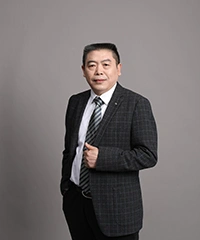
- Specialist in Automotive Engineering, Nanchang University; Vice Chairman, Suspension Technology Subcommittee, China Society of Automotive Engineers.
- Luo Zhilong has over 5 years of experience in leaf spring design, 7 years in air suspension product design, and 2 years in passenger vehicle stabilizer development. He is recognized as a pioneer in air suspension technology at Dongfeng Suspension Company. His current focus is on ADI materials and isothermal salt bath heat treatment technology.
- Chief Professor and PhD Supervisor, Wuhan University of Technology; Dean of the School of Automotive Engineering; Director, Hubei Provincial Engineering Technology Center for New Energy and Intelligent Connected Vehicles.
- Yan Fuwu has led and participated in numerous national R&D programs, including National Key R&D Plans, the National Natural Science Foundation, the National 863 Program, National Science and Technology Support Programs, and international research collaborations. He has published over 150 academic papers, including more than 70 indexed by SCI and EI, holds over 20 authorized invention patents, and has received six provincial and ministerial-level science and technology awards. Notable honors include the 2008 “Outstanding Figure in China’s Automotive Industry for 30 Years of Reform and Opening Up,” the 2009 Ministry of Education “GM China Innovation Talent in Higher Education” award, and the 2014 “Hubei Distinguished Teacher” award.
- Independent Director, Saiensi; Professor and PhD Supervisor, School of Automotive Engineering, Wuhan University of Technology.
- Du Changqing earned his PhD in Power Machinery and Engineering from Wuhan University of Technology in 2009, completed a postdoctoral fellowship at SAIC-GM-Wuling in 2012, and served as a visiting scholar at the Ohio State University Center for Automotive Research in 2016. His research focuses on new energy vehicle technologies. He has led 2 National Natural Science Foundation projects and 9 provincial-level research projects, and collaborated on numerous industry projects with Dongfeng Motor, SAIC-GM-Wuling, BYD, and Vishay Semiconductor. He has published over 70 academic papers and holds 9 authorized invention patents as first inventor.
- Doctor of Engineering, Faculty Member, School of Automotive Engineering, Wuhan University of Technology; Deputy Secretary-General, Gas Engine Division, Chinese Society of Internal Combustion Engines.
- Li Wenhao’s research specializes in thermal management technologies for new energy vehicles and powertrain systems, hydrogen fuel cell system integration and control, and enhanced heat transfer technologies. He has published over 20 SCI/EI indexed papers and contributed to an English-language academic monograph. He leads multiple projects funded by the Hubei Provincial Key Laboratory, Wuhan University of Technology Innovation Research Fund, and corporate commissions.
- Faculty Member, Department of Energy Storage and Technology, School of Automotive Engineering, Wuhan University of Technology.
- Wei Shusheng holds a bachelor’s degree in Mechanical Engineering from Huazhong University of Science and Technology and a PhD in Electrical Engineering from Tsinghua University. He specializes in power electronics, motor control, electric vehicle energy storage, and industrial robotics. He has published over 20 research articles and has extensive experience in both theoretical research and practical engineering applications.
Saiensi has independently developed the integrated electronic fuel pump with complete technical ownership and intellectual property rights, effectively solving the low-temperature starting challenges faced by diesel engines and diesel-powered vehicles. Related technologies have been granted 5 invention patents and 32 utility model patents, including brushless motor pumps, automatic oil pump fuel filter assemblies, and engine oil preheating devices.
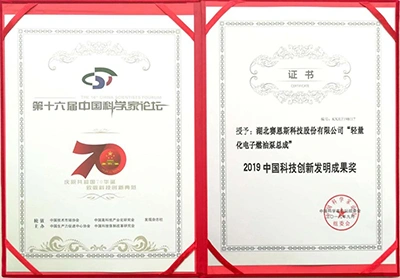
The integrated electronic fuel pump received the 2019 China Science and Technology Innovation Award, achieving a critical technological breakthrough and filling a domestic gap. Saiensi also developed the first domestic brushless motor and control technology for fuel pumps, producing the PHF16 series brushless integrated electronic fuel pump. Compared to similar products, its failure rate is reduced by over 40%, service life increased by 50%, and product quality meets or exceeds international standards.
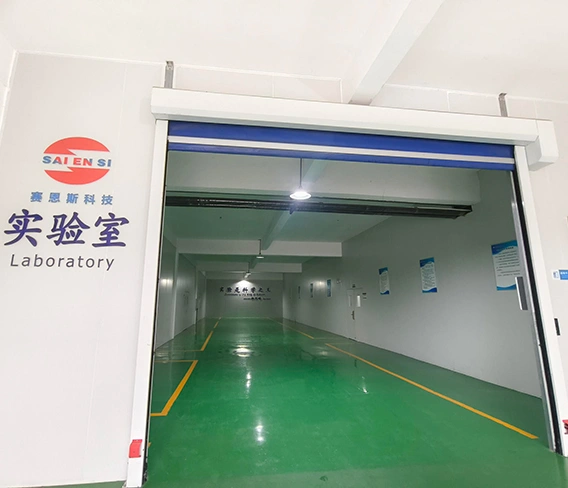
The Saiensi laboratory, established in 2017, includes:
- Cleanliness Laboratory
- EMC Laboratory
- Wind Tunnel Laboratory
- Reliability Laboratory
- Performance and Durability Laboratory
Equipped for testing electric oil pumps, automotive component performance, and durability, the lab uses equipment from leading brands such as Yuanfang Optoelectronics, Dongling Vibration, and Jufu Instruments.
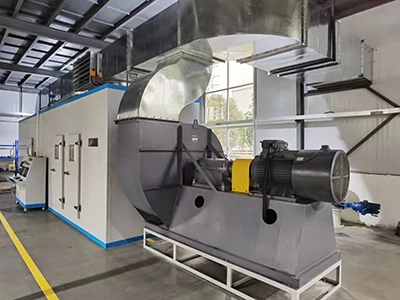
- Laboratory Area: 1,900 m²
- Technical Staff: 8 professionals
- Main Testing Fields: Automotive electronics and electrical components (controllers, sensors, fuel pumps, cooling fans)
- Reliability Testing: High/low temperature, humidity cycling, rapid temperature change, thermal shock, salt spray, gas corrosion, vibration, mechanical shock
- Electrical Testing: Open/short circuit, overvoltage, insulation resistance, transient conduction along power lines, electrostatic discharge
Automotive Fuel Pump & Thermal Management