 Automotive Fuel Pump & Thermal Management
Automotive High Voltage Electric Fan
Brushless electric fans used in high-voltage cooling system for electric vehicle (EV) and fuel cell electric vehicle (FCEV) applications
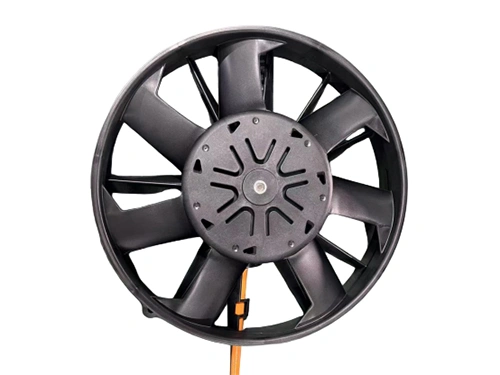


Saiensi is engaged in the innovation and production of advanced automotive thermal management solutions. Supported by a CNAS-accredited laboratory and an 80% in-house manufacturing rate, the company maintains rigorous control over materials, costs, and delivery processes. Its high-voltage DC brushless electric fans are engineered specifically for next-generation vehicle cooling systems.
High voltage electric fans are primarily used in fuel vehicles, electric vehicles, and other high-voltage electric platforms to ensure effective heat dissipation of critical components under high-temperature operating conditions.
Compared with low-voltage fans, high-voltage fans typically operate above 400V with a rated power exceeding 1 kW. High-voltage fans effectively eliminate the need for voltage conversion from low-voltage systems, reduce cable costs and installation space, and meet the high cooling demands of large fuel cell systems, delivering cost savings and compact integration across the thermal system.
In terms of cooling performance, high-voltage electronic fans provide the air volume required for high-power fuel cell systems. Additionally, they can distribute power for other low-voltage devices within the system, and their higher output capacity allows a single fan to replace multiple low-voltage units, saving space and reducing wiring complexity and energy loss.
| Model | | | |
| Test Voltage | 580V | 580V | 580V |
| Voltage Range | 450V-650V | 450V-650V | 450V-650V |
| Load Current | 0.8A±5% | 0.6A±5% | 1.5A±5% |
| Speed | 1000-4100rpm±5% | 800-3500rpm±5% | 1200-4750rpm±5% |
| Max Airflow | OPA 3600m³/h±5% | OPA 2800m³/h±5% | OPA 4300m³/h±5% |
| Power | 500W±5% | 350W±5% | 870W±5% |
| Control Method | PWM (50-500HZ) | PWM (50-500HZ) | PWM (50-500HZ) |
| Static Current | 5mA | 5mA | 5mA |
| Protection Level | IP67 | IP67 | IP67 |
- High efficiency: DC brushless fans achieve an average efficiency above 85%, far exceeding traditional AC fans (around 70%), significantly improving cooling performance and reducing energy consumption.
- Eco-friendly operation: Complying with modern emission and ESG standards, the intelligent control system minimizes idle energy use through dynamic speed regulation.
- Intelligent temperature control: Integrated PWM or ECU control automatically adjusts fan speed according to real-time temperature, preventing overheating and energy waste.
- Low noise design: Optimized blade geometry and aerodynamic design reduce tonal and flow noise by up to 30%, ensuring quieter operation.
- Extended durability: Equipped with premium NSK bearings and ADC12 die-cast aluminum housings, the fan operates reliably for 20,000–50,000 hours within a temperature range of –40 °C to 130 °C.
- High-voltage advantage: Direct integration with fuel cell high-voltage platforms removes the need for DCDC converters, cutting energy losses by approximately 30% and lowering wiring and component costs.
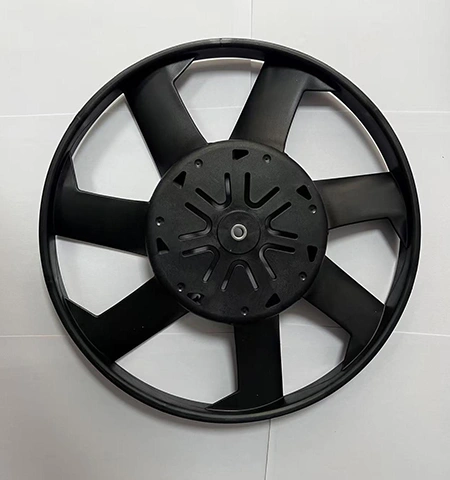 Fan blade
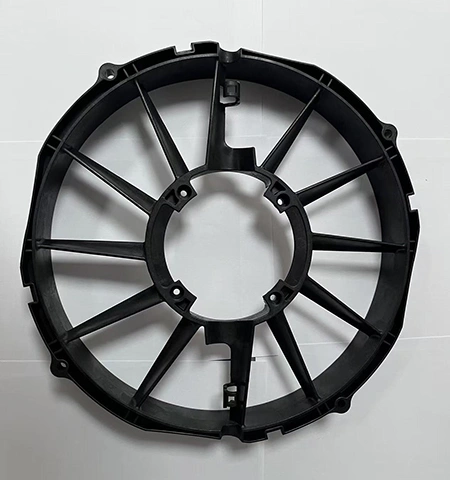 Fan frame
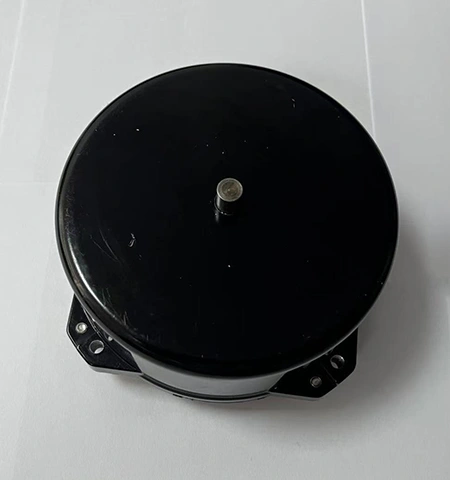 Motor
Motor
How does the high-voltage electric fan help reduce system cost?
The fan integrates PWM or ECU-based intelligent speed control, adjusting performance according to thermal load and eliminating unnecessary energy use. By operating directly on the fuel cell’s high-voltage platform, it removes the need for DC–DC conversion, reducing both energy loss (by about 30%) and cabling costs.